ATLAS OF PLAYING CARDS
20th-Century Playing Cards: A Photographic Archive
Many Galleries of Regional and National patterns with sections on Tarot Decks
THE VIZZOLA COLLECTION
ATLAS OF PLAYING CARDS
A VISUAL ARCHIVE OF STANDARD PATTERNS
WORLD PLAYING CARDS: THE WESTERN STYLE [1880—2020]
LAST UPGRADE: 15.08.2026 | LAST ENTRY: INV 2913
MAIN INDEX
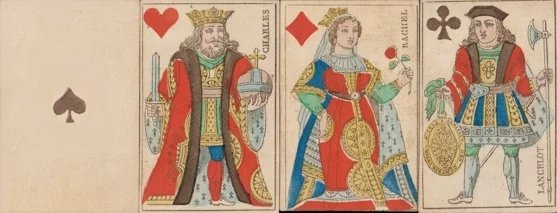
In this completely abstract system, suits are hearts and diamonds (red), and spades and clubs (black). Court cards are King, Queen, and Jack, depicted full-length in the oldest decks. A standard complete pack consists of 52 cards, with numeral cards ranging from 2 to 10. In modern packs, these are usually accompanied by one or more jokers. However, many regional or national decks are still widely used, particularly those consisting of 32 [A789XJQK], 36 [A6789XJQK], or 40 [A234567JQK] cards, as well as other configurations for specific games. Numeral (or pip) cards are plain, with suit symbols arranged on the card according to a repetitive and well-established pattern. Since this system covers a large number of decks, it was necessary to divide it into several sub-categories.


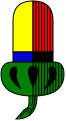

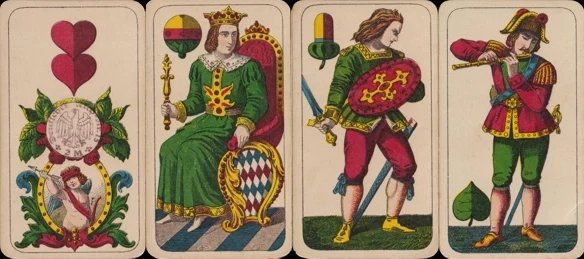
The system is built on a hunting theme. Suits are hearts, bells, leaves, and acorns. Court cards are King and two Knaves, distinguished – even by name – according to position of suit symbols on card: "Ober" if at top, "Unter" if at bottom. Deuce ('2') always replaces ace, although name of the latter is often used. Full-length decks still exist, but many regional patterns have switched to double-headed cards. Most common decks consist of 32 [D789XUOK] or 36 [D6789XUOK] cards (larger packs are not standard in this system), but other compositions are also widespread. On numeral cards (where the 10s are usually marked with an 'X'), those featuring full-length designs are richly decorated with various scenes, while the double-headed versions display suit symbols on both halves.
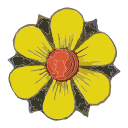
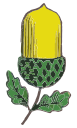
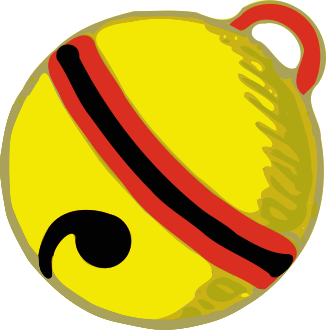
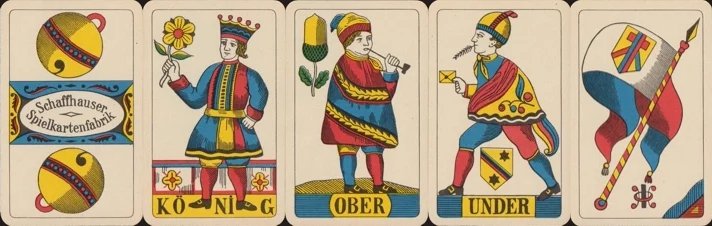
Suits in this system are shields, bells, roses, and acorns. Perhaps partly due to limited geographical spread, the system has become unified into a single pattern. Court cards are King and two Knaves, distinguished – even by name – according to position of suit symbols on card: "Ober" if at top, "Unter" (or "Under") if at bottom. Cards, now double-headed, have retained the use of a flag (the Banner) in place of '10'. Deuce ('2') always replaces ace, although name of the latter is often used. Note that deuce of shields is now depicted in shape of a heart (!). Deck consists of 36 [D6789BUOK] cards, though 48-card version [D3456789BUOK] is still rarely used.
A Swiss pack made by Müller
A Swiss pack made by Müller
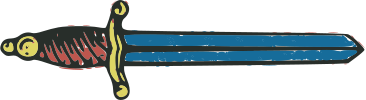
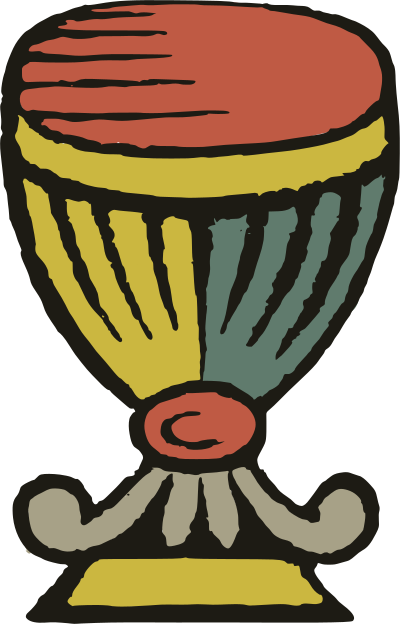
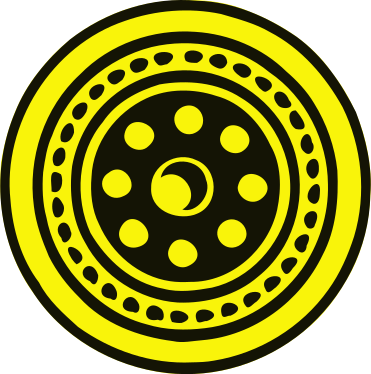
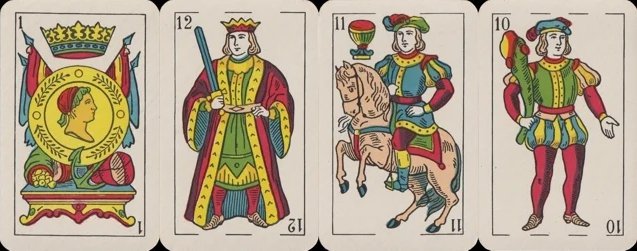
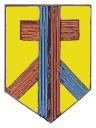
Derived directly from the original Arabic system, suits are coins and cups (short), and swords and clubs (long). Here, clubs are always of natural, unworked wood, often knotted and shaped like cudgels or truncheons, or otherwise resemble a branch taken directly from a tree. In either case, these distinctive features ensure clear identification. The shape of cups varies considerably. Court cards are King, Knight, and Knave; the latter are sometimes female (or unclear sex). On the numeral cards, size of suit symbols varies by quantity, being larger when few and smaller when many. At other times, long suits are depicted full-length, intersecting diagonally to form a grid. Decks, which exclude '10' (replaced by Knaves), consist of 40 [A234567JCK] or 48 [A23456789JCK] cards, mainly full-length.
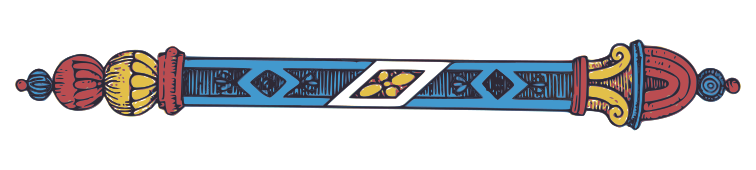
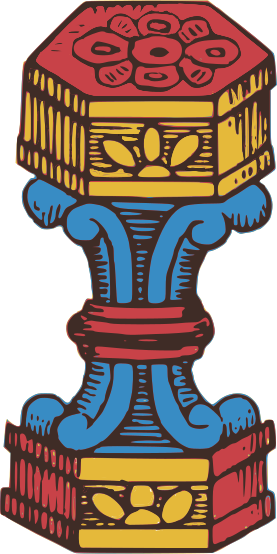
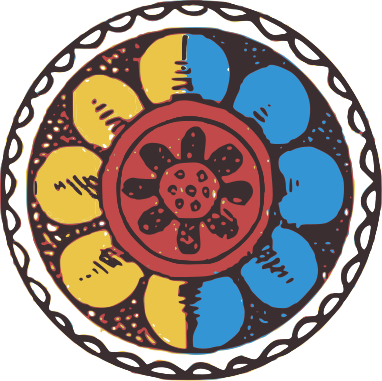
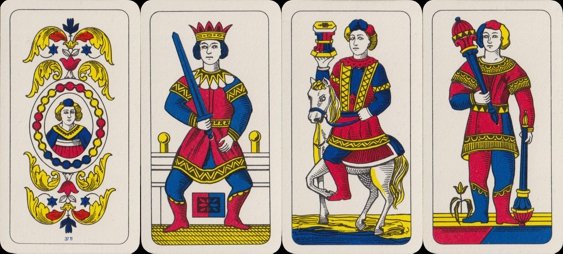
Derived directly from the original Arabic system, suits are coins and cups (short), and swords and clubs (long). Here, clubs are always stylised objects resembling sceptres, ceremonial batons, or staffs – distinctive features ensuring definitive identification. Cups vary in shape, while coins often differ in color. Although swords are often described as curved, they are essentially straight (see figures) – except in "Trappola" decks, where they are curved like scimitars. Court cards are King, Knight, and Knave. Long suits on numeral cards are always depicted full-length: straight (clubs crossed at centre, as well as swords in certain tarot decks) or curved (swords crossed at ends). Decks, full-length or double-headed, usually consist of 40 [A234567JCK] or 52 cards; Trappola, 36 [A2789XJCK].
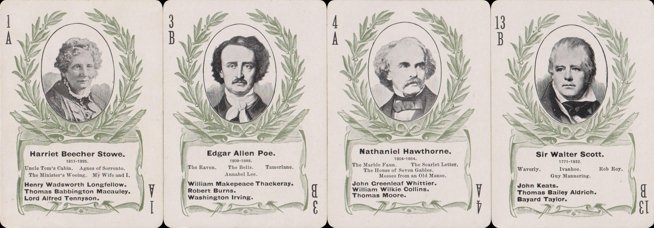
Included here are decks not fitting into previous categories. Highlights themes differing from traditional playing cards, such as alternative systems, combinations, hybrids, indices-only, currency, graphic design & art, transformations, conjuring, fortune-telling, tarot reading, children’s games, multi-purpose, and unique decks. Also features various proprietary games or card versions of other games, including Bell and Hammer, Block/Quit, Chess, Cuckoo, Dominoes, Elfer Raus!, Flinch, Gupai, Hanafuda, Lottery, Mah Jong, Mercante in Fiera, Mus, Punta, Quartets, Quitli/Kvitlech, Rook, Roulette, Skip-Bo, Uno, Unsun Karuta, Vingt-et-un, Whot, and many more.